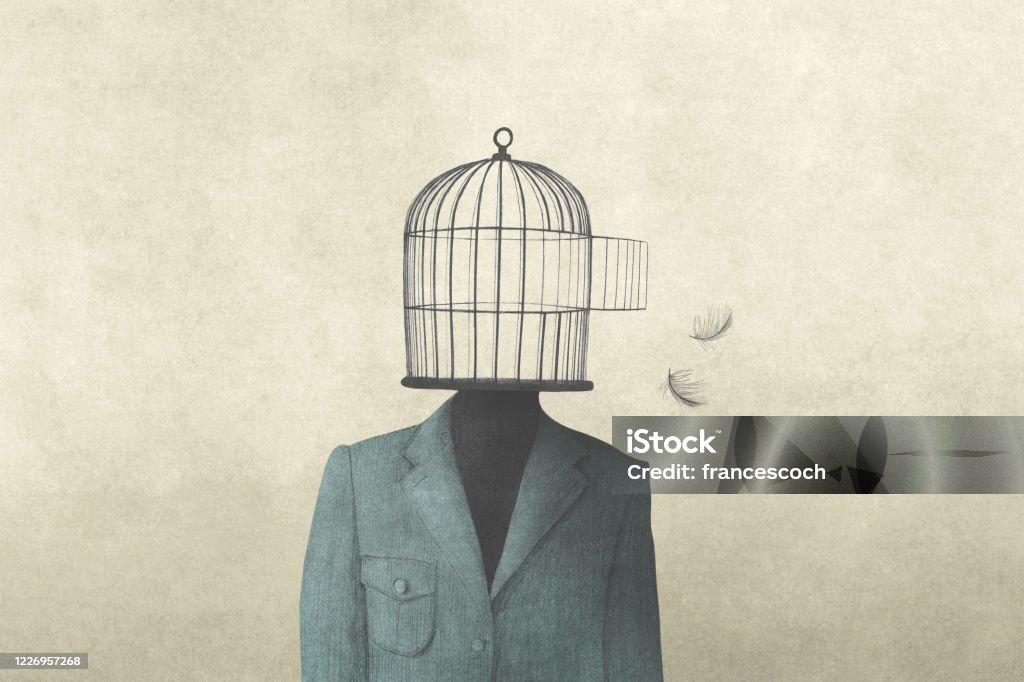
The human mind is an extraordinary problem-solving machine. Over hundreds of thousands of years of evolution, it developed a capacity unique in the animal kingdom: the ability to think about things that are not present. To imagine the future. To replay the past. To construct scenarios, simulate outcomes, and plan accordingly.
This ability saved our ancestors’ lives. The person who worried about the lion that might be behind the next tree was more likely to survive than the person who didn’t. The person who replayed the argument with the tribal elder and figured out how to avoid offending him again had a social advantage. The ability to anticipate threat — even imaginary threat — was, for most of human history, a survival superpower.
The Problem With a Problem-Solving Mind
Here is the difficulty: that same problem-solving machinery does not distinguish well between a real threat and a thought about a threat.
When you think about giving a presentation next week and your heart rate rises, your palms sweat, and your stomach clenches — your body is responding as if the presentation is happening right now. Your nervous system cannot reliably tell the difference between an imagined event and a real one. Words and mental images trigger the same threat responses as actual environmental danger.
This is the root of most human psychological suffering. Not external events, but the mind’s relationship to its own contents.
ACT researcher Steven Hayes describes it this way: the very thing that makes humans capable of sophisticated planning, creativity, and language — our ability to relate words and symbols to each other and to the world — is the same thing that makes us capable of a kind of suffering no other animal experiences.
A dog, when the scary event is over, is over it. It does not replay the experience at three in the morning, construct catastrophic futures based on it, or build an identity around having experienced it. Humans do all of these things, automatically and constantly, because our minds are built for it.
Control: The Default Strategy
When psychological pain shows up — anxiety, sadness, shame, the memory of a humiliation, the fear of failure — what do we naturally do? We try to control it. We try to push it away, argue with it, suppress it, reason our way past it, or numb it.
Sometimes this works in the short term. Distraction can give temporary relief. Avoidance can reduce immediate discomfort. But the research on experiential avoidance — the technical term for these control strategies — shows something striking: the more you try to suppress or avoid a thought or feeling, the more it tends to persist.
The classic demonstration is the white bear experiment, first described by psychologist Daniel Wegner. Participants were told not to think about a white bear for a period of time. Not only did they fail to suppress the thought — the bear showed up more often than in a control group that was free to think about anything. Suppression produced the opposite of its intended effect.
This is not a personal failing. This is how minds work. The suppression instruction itself requires holding the thought active in working memory in order to check whether you are thinking about it. The mental effort of not-thinking-about-X keeps X alive.
The ACT Alternative
ACT does not ask you to think positively. It does not ask you to replace irrational thoughts with rational ones. It does not promise that if you identify the cognitive distortion and correct it, the distress will go away.
Instead, it offers something genuinely different: the possibility of changing your relationship with your thoughts and feelings rather than their content.
The technical term is psychological flexibility — the ability to be in contact with the present moment, open to your experience as it is, and move in directions that matter to you, even when difficult thoughts and feelings are present.
Notice what that definition does not say. It does not say that the difficult thoughts will go away. It does not say that acceptance means liking what you feel. It says that you can move — you can act, choose, live — even when the hard stuff is there.
This is the switch the title refers to. Not an off switch for pain, but a switch in orientation: from fighting your inner world to engaging with your outer one.
EXERCISE: The Control Inventory
Take 10 minutes with a journal. Write down:
1. One recurring difficult thought or feeling you have been struggling with.
2. All the things you have tried to make it go away or reduce it.
3. Honestly assess: has this struggle made the thought or feeling more present in your life, or less?
This is not about blaming yourself. It is about noticing what your control strategies have actually produced.
Most people find that the more they have fought a particular thought or feeling, the more central it has become to their daily experience.
You don’t need to do anything with this observation yet. Simply notice it.